
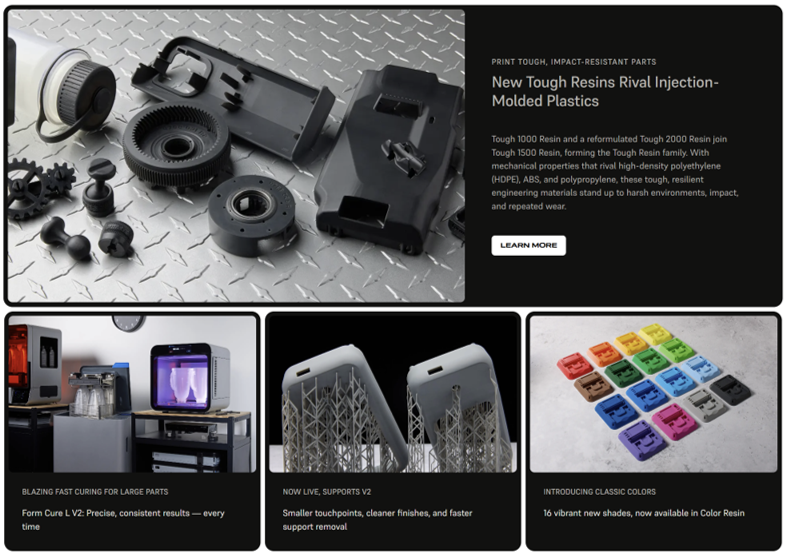
The Filament and Resin Dictionary
FILAMENT
Choosing the right material for the job is 90% of the battle. Here’s the breakdown of our most popular stocks.
PLA (Polylactic Acid)
Best For: Beginners, decorative models, and rapid prototyping.
Pros: Very easy to print, low warping, no toxic fumes, biodegradable.
Cons: Low heat resistance (softens at 60°C); not suitable for outdoor use or hot cars.
Typical Temp: 200°C – 220°C Nozzle / 50°C – 60°C Bed.
PETG (Polyethylene Terephthalate Glycol)
Best For: Functional parts, mechanical brackets, and water-resistant items.
Pros: Durable, high impact resistance, and better heat resistance than PLA.
Cons: Prone to "stringing"; sticks too well to glass (use a release agent!).
Typical Temp: 230°C – 250°C Nozzle / 70°C – 80°C Bed.
ABS / ASA (Acrylonitrile Styrene Acrylate)
Best For: Automotive parts, outdoor gear, and parts requiring UV resistance (ASA).
Pros: High strength and heat resistance. Can be vapor-smoothed with acetone.
Cons: Significant warping/shrinking; requires an enclosure and produces strong odors.
Typical Temp: 240°C – 260°C Nozzle / 100°C – 110°C Bed.
TPU (Thermoplastic Polyurethane)
Best For: Phone cases, gaskets, RC car tires, and wearable items.
Pros: Flexible, rubber-like, and nearly impossible to break.
Cons: Difficult to print on "Bowden" style printers; must be printed very slowly.
Typical Temp: 220°C – 240°C Nozzle / Room Temp – 60°C Bed.
Please note this list may not include every material and is offered as a guide. Please research your product with your preferred supplier to check prior to use.
RESINS
Typical 3D printing resins include Standard (versatile), Tough (durable), ABS-like (rigid/durable), Flexible (elastic), Water-Washable (easy cleaning), and High-Temp (high heat resistance) resins. These materials, often used with SLA, DLP, or LCD printers, are specialized for applications ranging from high-detail miniatures to functional prototypes.
Here are the most common types of resin available for 3D printing:
Standard/General Purpose Resin: Often chosen for its low cost and ease of use, providing high-detail with a smooth surface finish. Perfect for rapid prototyping and tabletop miniatures.
ABS-Like Resin: Engineered to mimic the, strength, rigidity, and durability of ABS thermoplastic. Excellent for functional, functional, engineering-grade prototypes.
Tough Resin: Formulated for high impact strength and durability, it is less brittle than standard resin. Perfect for functional parts that need to withstand wear.
Flexible/Elastic Resin: These materials provide rubber-like properties, allowing for bending, stretching, and compression. Ideal for gaskets, wearables, and prototyping soft-touch parts.
Water-Washable Resin: Designed for easy cleaning with water instead of isopropyl alcohol (IPA), making post-processing simpler and less toxic.
High-Temperature/Heat-Resistant Resin: Withstands high thermal stress, often with Heat Deflection Temperatures (HDT) exceeding 200 degrees C.
Dental/Biocompatible Resin: Specialized resins that are safe for oral contact, used for creating crowns, bridges, and retainers.
Other specialized types include ceramic, clear for transparent parts, and dental resins.
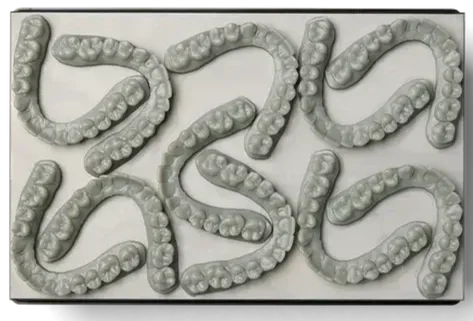
FAST PRINT RESIN
TOUGH 2000 RESIN